Tile designs
This post will concentrate on the ‘Wessex style’ tiles where white clay is inlaid into indents in a tile made from red clay.
Tile designs have been widely cataloged at the site level (eg Winchester Cathedral) , regional (eg Somerset) or at the national level. The catalogs usually predate easy photographic representation and so they will list the dimensions of the tile with a B+W sketch of the tile. This can lead to problems and errors. Terracotta tiles glazed in a lead glaze are relatively soft and have been worn down over the centuries, the glaze has generally been lost completely and the clays have been worn down such that the patterns have been lost.
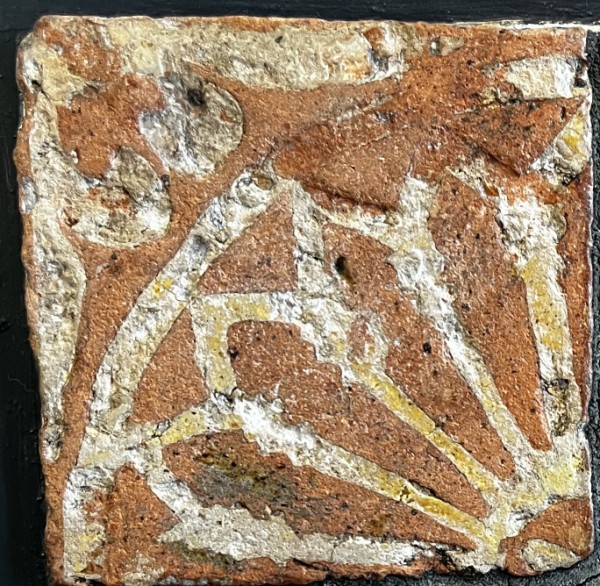
In the worst cases the tiles will be so worn that the indents or ’keys’ will start to show through from the back. As such it is rare to find a tile in which the complete indented design is showing. Various parts will have been lost and the archivist has to look at several tiles of the same pattern to discern the full design. A desire to have ‘the full pattern’ leads to an amount of artistic licence. This can cause problems where groups of tiles (often four) where created to link up into a bigger design. If too much licence was taken with the design some of the elements that span across tiles are lost - see picture of ‘tree of life tiles’.
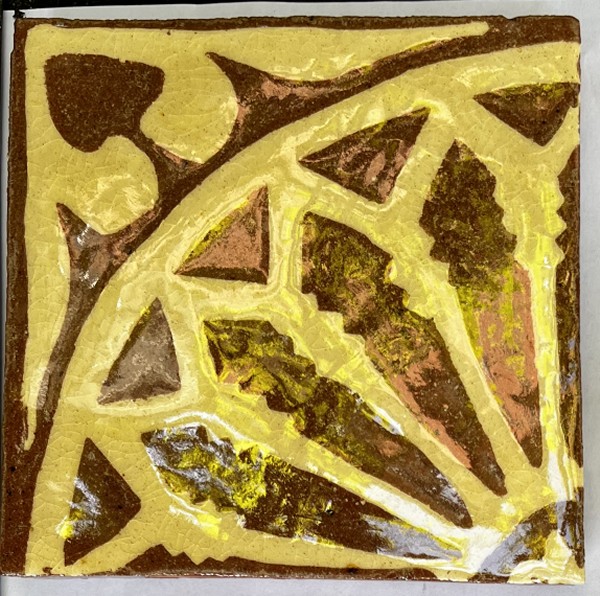
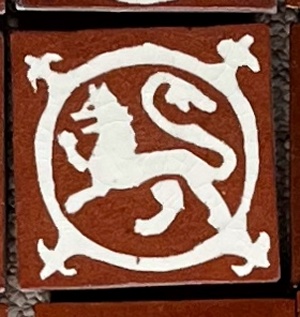
A further complication is that the indents in the tile are usually flared out towards the top. This helps the stamp release from the clay. However this ‘flare’ does mean that the pattern at the top of the indent differs slightly to that at the bottom. A Fleur-de-Lys or leaf motif will appear weaker and ‘scrawnier’ at the base. After centuries of wear it is only the ‘scrawnier’ outlier from the bottom of the indent that remains. See the ‘lion rampant’ design below from Winchester Cathedral and in particular the Fleur-de-Lys symbols in the corners. Much bolder, stronger designs are found on other tiles - were these ones always to puny - of have they just been excessively worn?
Creating designs
Whilst there are no surviving examples of the Wessex type stamps it would seem they were carved into wood. Modern workers have found that beech wood works well. I am doubtful that the tile-makers made any but the simplest designs. When they were working on a major project, be it a cathedral or a palace, they would have been one of many types of craft people on site. I think it was more likely that they would have worked with the carpenters and wood carvers on site. Maybe they did they own carving on the more frivolous tile designs - the two pikes from Selborne, the elephant at Muchelney and some of the very primative ‘three lions’ as seen at Westminster and Exeter Abbey’s.
My image is of a master tiler travelling from job to job carrying his own set of stamps. These would have been relatively small and light and suitable for carrying on horse back, by cart or on foot. At a new site he might have attached himself to a group making roof tiles. Frames for his mould frames could be made up locally from simple wood to fit his stamp sizes and the local clays used. There is evidence of tilers using the same stamps on several sites - identical designs appear at different, major locations. He would have used the local clays and the slightly different shrinkage rates of different clays could account for the slight differences in tile sizes.
In any ‘pavement’ of tiles all the tiles of one design are the same - there is little evidence that several stamps of similar design were used to ‘speed up production’.
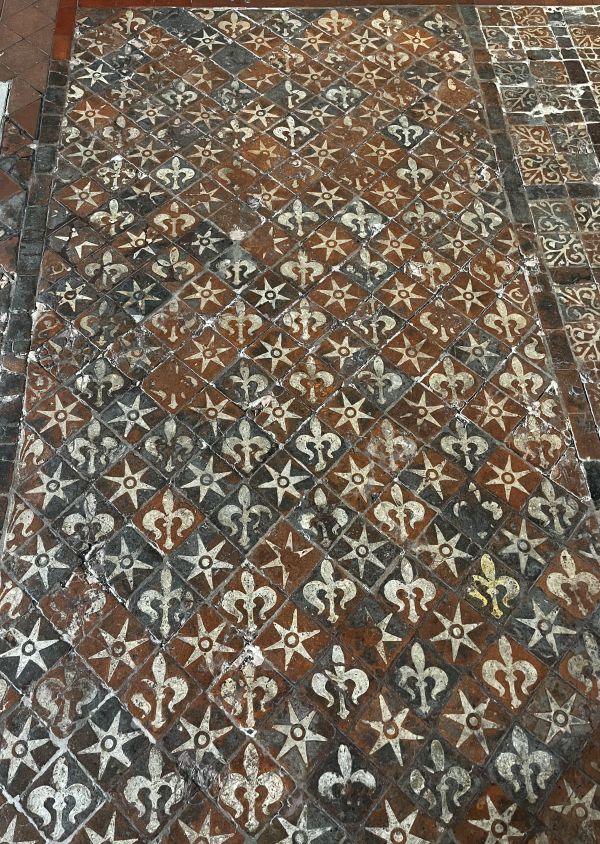
It would seem that stamps were expensive and each one had to be used as much as possible. For example there is a tile stamp of a castle (part of the coat of arms of Eleanor of Castile) that was used in the Winchester area. On some sites (Titchfield Abbey) the design is perfect, on others part of the carving had broken off and one of the battlements on the castle is missing (Winchester College). Although imperfect the design was still used at the college even though this was a high status site.
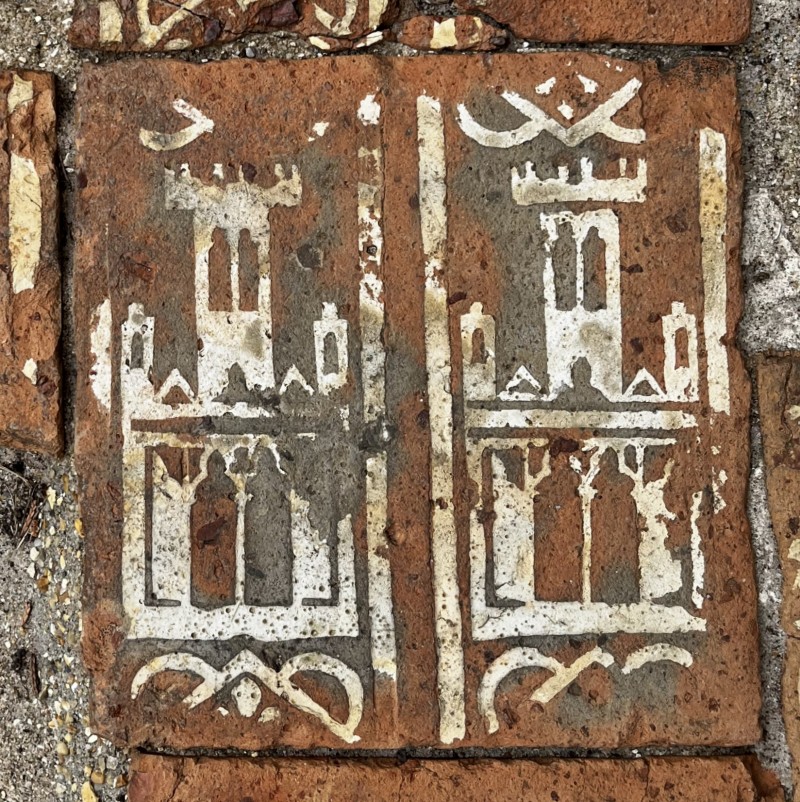
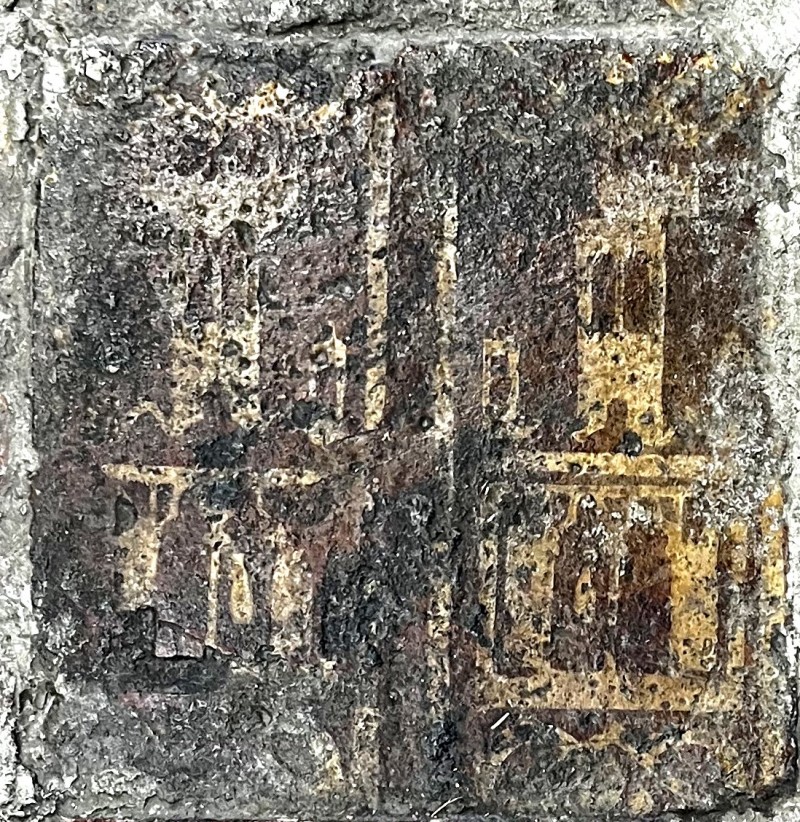
The facts that stamps were expensive, used on successive jobs and that they were used even after they were slightly damaged has a bearing on how tiles would have been made. If the stamps were valuable and breakable they would have been used with care - they would not have been hammered into the clay. Tiles were made in large numbers and with only a single stamp this could be a rate-limiting step. The stamp would have had to be used quickly on each tile, removed and re-used - with minimal delay for drying or cleaning - to make more tiles. From this I think it follows that they were pushed, not hammered into the clay and pushed into the ‘top’ surface of the clay so they could be easily and quickly removed for re-use whilst the tile remained un-disturbed in the simpler mould for further processes.